
How to Create a Website That Reflects Your Brand Identity
- 26 Oct 2026
- By admin
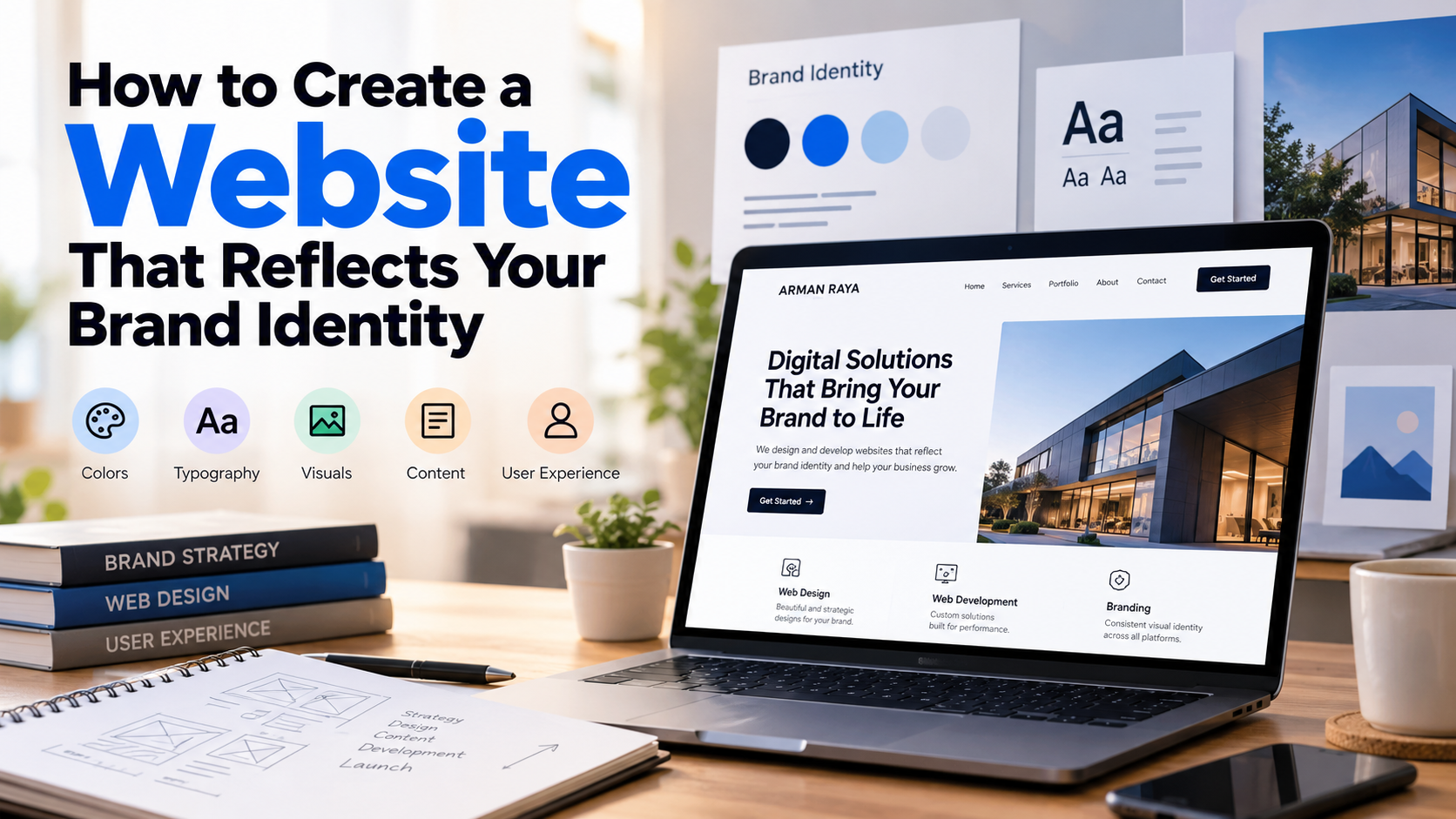
Discover how to create a website that reflects your brand identity. Learn how to use colors, typography, visuals, content, and user experience to build a consistent online presence that attracts customers and strengthens brand recognition.
How to Create a Website That Reflects Your Brand Identity
In today's competitive digital landscape, your website is more than just an online presence. It is a powerful representation of your business, your values, and what makes your brand unique. When potential customers visit your website, they begin forming an opinion about your company within seconds. A well-designed website can communicate professionalism, build trust, and encourage visitors to become customers.
Creating a website that reflects your brand identity requires more than choosing attractive colors or adding a logo. It involves combining visual design, messaging, functionality, and user experience to create a consistent digital representation of your business.
Whether you are launching a new company or redesigning an existing website, understanding the relationship between website design and brand identity can help you build a stronger and more recognizable online presence.
In this article, we explore the essential steps to creating a website that communicates your brand identity effectively and supports your business goals.
1. Understand Your Brand Identity Before Designing Your Website
Before starting the website design process, you need a clear understanding of your brand identity. Your website should communicate who you are, what your business offers, and why customers should choose you over competitors.
Brand identity includes several elements:
-
Mission and values: What does your business stand for?
-
Target audience: Who are your ideal customers?
-
Brand personality: Is your brand professional, innovative, friendly, luxurious, or approachable?
-
Unique value proposition: What makes your products or services different?
-
Visual identity: What colors, typography, logos, and imagery represent your business?
These elements establish the foundation for your website's design and content.
For example, a technology company might use a clean layout, modern typography, and subtle animations to communicate innovation. A luxury brand, on the other hand, might prioritize elegant typography, generous whitespace, and high-quality photography.
Understanding your brand personality helps you make design decisions that reinforce your company's identity rather than simply following design trends.
2. Choose Colors That Represent Your Brand
Color is one of the most recognizable elements of visual branding. The colors used throughout your website influence its overall appearance and help create a consistent visual experience.
Your website's color palette should align with your existing brand guidelines and communicate the personality of your business.
Consider the following principles when selecting website colors:
-
Use your primary brand color: Apply it consistently to important elements such as buttons, links, and selected headings.
-
Choose complementary colors: Select supporting colors that work well with your primary color.
-
Maintain sufficient contrast: Ensure that text and interactive elements remain readable.
-
Avoid unnecessary colors: Too many competing colors can make your website feel inconsistent and unprofessional.
-
Consider accessibility: Make sure your color combinations remain usable for people with visual impairments.
For example, a financial services company might use navy blue and neutral tones to create a professional appearance, while a creative agency might choose a more expressive palette to communicate originality.
The goal is not to use colors simply because they look attractive. Every color should contribute to a recognizable and consistent brand experience.
3. Select Typography That Matches Your Brand Personality
Typography plays a significant role in how visitors perceive your business. The fonts you choose can communicate authority, creativity, simplicity, elegance, or friendliness.
A website's typography should complement its visual identity while making information easy to read.
When selecting fonts for your website, consider the following recommendations:
-
Choose fonts that match your brand personality.
-
Use a consistent typography system across all pages.
-
Establish clear differences between headings, subheadings, and body text.
-
Ensure that font sizes remain readable on mobile devices.
-
Limit the number of font families to maintain visual consistency.
For example, a corporate website may benefit from clean, modern sans-serif fonts, while a creative portfolio might use distinctive typography to express its personality.
Typography should also support your content hierarchy. Visitors should be able to scan a page quickly, identify important information, and understand what to do next.
A consistent typography system makes your website easier to navigate and strengthens your overall brand presentation.
4. Design a Logo and Visual Elements Consistent With Your Brand
Your logo is often one of the first elements visitors associate with your business. It should be displayed clearly and consistently throughout your website.
However, effective branding extends beyond the logo itself. Your website should also incorporate supporting visual elements that create a unified identity.
These elements may include:
-
Brand icons and illustrations
-
Custom graphics
-
Photography styles
-
Background patterns
-
Decorative shapes
-
Buttons and interface components
-
Branded animations and transitions
Consistency is essential. If your logo uses a minimalist design, for example, combining it with overly decorative graphics may create a confusing visual experience.
Whenever possible, use original images and graphics that reflect your business rather than relying entirely on generic stock photography.
Your website should feel like a natural extension of your brand, with every visual element contributing to a cohesive appearance.
5. Create a Website Layout That Supports Your Brand Message
Your website's layout determines how information is organized and how visitors interact with your content. A strong layout helps communicate your brand message while making it easy for users to find what they need.
Start by identifying the most important information your visitors should see.
For many business websites, the homepage should clearly communicate:
-
What the business does
-
Who it serves
-
What makes it different
-
Which products or services it offers
-
How visitors can take the next step
Your homepage hero section is particularly important because it establishes the first impression.
Use a clear headline, a concise supporting message, relevant imagery, and a prominent call-to-action button. Avoid filling the first screen with unnecessary text or decorative elements that distract from your primary message.
For example, a web development agency might use a headline explaining how it helps businesses build professional websites, followed by a short description of its services and a button inviting visitors to request a consultation.
Your layout should reinforce your brand's priorities while providing a straightforward path through the website.
6. Develop Content That Communicates Your Brand Voice
Your website's content is just as important as its visual design. The words you use help define your brand personality and explain the value your business provides.
A consistent brand voice makes your company more recognizable and helps establish a stronger connection with your target audience.
Begin by defining how your business should communicate. Your brand voice might be:
-
Professional and authoritative
-
Friendly and conversational
-
Innovative and forward-thinking
-
Simple and informative
-
Premium and sophisticated
Once you establish your preferred tone, apply it consistently across your website.
Your homepage, About Us page, service descriptions, blog articles, and contact page should all communicate the same underlying brand personality.
Your content should also focus on your customers rather than discussing your business exclusively. Explain how your services solve problems, address common concerns, and deliver meaningful benefits.
Avoid vague statements such as "We provide the best solutions." Instead, explain specifically what you do, who you help, and how your approach creates value.
Clear, relevant content helps visitors understand your business and makes your website more effective at converting interest into action.
7. Prioritize User Experience and Website Navigation
A visually attractive website will not successfully represent your brand if visitors struggle to use it.
User experience (UX) describes how people interact with your website, including how easily they find information, navigate between pages, and complete important actions.
A professional website should provide a smooth and intuitive experience that reflects the quality of your business.
To improve website usability:
-
Create a simple, logical navigation menu.
-
Organize content into clearly defined sections.
-
Make contact information easy to find.
-
Use descriptive labels for navigation links and buttons.
-
Ensure forms are straightforward to complete.
-
Reduce unnecessary steps in important user journeys.
-
Provide clear feedback when visitors interact with interface elements.
Consistency is particularly important. Buttons, menus, forms, and other interactive components should behave predictably throughout the website.
For example, if your primary call-to-action uses a specific color and style on the homepage, maintain that design across your service pages and landing pages.
A positive user experience reinforces your brand's credibility and shows visitors that your business values their time.
8. Make Your Website Responsive Across All Devices
Your website should communicate your brand identity consistently across desktop computers, tablets, and smartphones.
Responsive web design allows your website's layout and content to adapt to different screen sizes while maintaining usability and visual consistency.
A desktop layout that looks impressive may become difficult to navigate on a smaller screen if buttons are too close together, text is too small, or important content is hidden.
To create a consistent mobile experience:
-
Use flexible layouts that adapt to different screen widths.
-
Make text readable without requiring users to zoom.
-
Ensure buttons and links are easy to tap.
-
Optimize images for faster loading.
-
Simplify navigation where appropriate.
-
Test important pages on different devices and browsers.
Mobile responsiveness also supports search engine optimization because Google primarily uses the mobile version of a website's content for indexing.
A website that performs well across devices helps your brand remain accessible and professional wherever customers discover your business.
9. Use High-Quality Images and Authentic Visual Content
Images communicate information quickly and can significantly influence how visitors perceive your business.
The visual content on your website should support your brand story and provide visitors with a clearer understanding of your products, services, team, or working process.
Whenever possible, consider using:
-
Professional photographs of your team or workplace
-
Original product images
-
Screenshots of completed projects
-
Custom illustrations
-
Portfolio images showing your work
-
Visual examples demonstrating your expertise
Authentic imagery can help distinguish your business from competitors using the same generic stock photographs.
For example, a web design agency can showcase screenshots of websites it has developed, allowing potential clients to evaluate its design quality and technical capabilities.
However, visual quality should not come at the expense of performance. Compress images appropriately, use modern image formats where suitable, and provide descriptive alternative text for meaningful images.
High-quality visuals combined with fast loading times create a better experience and help communicate your brand's professionalism.
10. Build Trust Through Consistent Branding and Credibility
Trust is essential when visitors are deciding whether to purchase your products or contact your business.
Your website should provide clear evidence that your company is credible, professional, and capable of delivering on its promises.
Several elements can help establish trust:
Customer testimonials: Genuine feedback can help potential customers understand other people's experiences with your business.
Portfolio and case studies: Demonstrating completed projects provides practical evidence of your expertise.
Clear service descriptions: Explain what you offer, how your process works, and what customers can expect.
Professional contact information: Make it easy for visitors to reach your business through appropriate contact channels.
About Us page: Introduce your company, explain your values, and communicate what distinguishes your business.
Consistent visual identity: Maintain the same branding across your website, social media profiles, and other customer-facing materials.
Avoid exaggerated claims, fabricated testimonials, or unsupported promises. Credibility grows when your messaging is accurate and your website reflects the quality of your actual services.
11. Optimize Your Website for Search Engines
A website that reflects your brand identity should also be discoverable by the people searching for your products or services.
Search engine optimization (SEO) helps search engines understand your content and can improve your visibility in relevant search results.
Your branding and SEO strategies should support each other rather than compete.
Start with these essential SEO practices:
Use descriptive page titles: Write unique titles that accurately describe the content of each page.
Write useful meta descriptions: Summarize each page clearly to encourage relevant users to visit your website.
Structure content with headings: Use a logical heading hierarchy to organize information.
Create descriptive URLs: Use short, meaningful URLs that help visitors understand what a page contains.
Optimize images: Compress image files and add meaningful alt text where appropriate.
Improve page performance: Reduce unnecessary scripts, optimize assets, and monitor loading speed.
Publish useful content: Create articles that answer your audience's questions and demonstrate your expertise.
Use internal links: Connect related pages and blog articles to help visitors discover additional information.
For example, a web development agency could publish articles about website planning, responsive design, business branding, and custom website development. These resources can answer customer questions while supporting the agency's professional positioning.
Remember that SEO is an ongoing process. Monitor your website's performance and update content as your audience's needs and search behavior evolve.
12. Maintain Brand Consistency as Your Business Grows
Your brand identity should remain recognizable as your website evolves.
Over time, you may introduce new services, expand into additional markets, or update your website's functionality. Without clear design guidelines, these changes can create an inconsistent experience.
A simple brand style guide can help prevent this problem.
Your guidelines should document:
-
Primary and secondary brand colors
-
Typography and font sizes
-
Logo variations and usage rules
-
Button and link styles
-
Image and illustration guidelines
-
Spacing and layout principles
-
Tone of voice and writing conventions
These guidelines help designers, developers, content creators, and marketing teams maintain a consistent brand experience.
You should also review your website periodically to identify outdated content, inconsistent design elements, broken links, and usability issues.
Brand consistency does not mean your website can never change. It means that improvements should strengthen your brand rather than make it less recognizable.
13. Work With a Professional Web Design and Development Team
Creating a website that accurately reflects your brand identity requires a combination of strategic planning, visual design, content development, and technical expertise.
A professional web design and development team can help translate your brand guidelines into a functional website tailored to your business objectives.
Depending on your requirements, the process may include:
-
Brand discovery and audience research
-
Website strategy and information architecture
-
Wireframing and user experience planning
-
Visual design and brand integration
-
Responsive frontend development
-
Backend development and content management
-
SEO implementation and performance optimization
-
Testing, launch, and ongoing maintenance
For businesses that require more than a standard template, custom website development can provide greater flexibility in design, functionality, and integration with existing business systems.
The right approach depends on your budget, technical requirements, growth plans, and the complexity of your website.
A well-planned project should balance appearance, usability, performance, maintainability, and business goals.
Conclusion: Turn Your Brand Identity Into a Powerful Online Experience
Your website is one of the most important ways people experience your brand online. Every design decision, from colors and typography to navigation and content, contributes to how visitors perceive your business.
To create a website that reflects your brand identity, begin by defining your values, audience, and personality. Translate those characteristics into a consistent visual design, communicate your message clearly, prioritize user experience, and ensure that your website performs well across devices.
Combine these principles with useful content, strong credibility signals, and effective SEO practices to build a website that is both recognizable and functional.
Most importantly, remember that your website should do more than look good. It should communicate what makes your business unique, build meaningful relationships with potential customers, and support your long-term business objectives.
Ready to build a website that represents your brand?
At ARMAN RAYA, we help businesses establish a professional online presence through thoughtful website design and custom web development. Whether you need a new business website or want to improve your existing digital presence, a strategic approach can help turn your brand identity into a website that works for your business.
- Tags:
- Website Development
- Website Design
- Brand Identity
- Business Branding
More Related Articles
Explore more insights on design, development, SEO, and digital products from the Arman Raya team.

How to Build Customer Trust on Your Web…
- 14 Jun 2026
- By Arman Raya

Why Doesn’t Your Website Generate Sales?
- 28 May 2026
- By Arman Raya

Comprehensive Guide to Designing Educat…
- 26 May 2026
- By Arman Raya

Lawyer Website Design with the Django F…
- 24 May 2026
- By Arman Raya
Website Design for Real Estate: A Smart…
- 16 May 2026
- By Arman Raya

Why Do Doctors Need a Website?
- 14 May 2026
- By Arman Raya

Website or Instagram for Business? A Co…
- 13 May 2026
- By Arman Raya
Website Development Steps: A Complete G…
- 12 May 2026
- By Arman Raya